

FEMTO-ST institute is a joint research unit between the CNRS and Université Marie et Louis Pasteur , SUPMICROTECH and the UTBM. The FEMTO-ST Institute is a world-class public research laboratory with a staff of over 700. Scientific support services are organized into shared services. Scientific activity is organized into seven scientific departments and one transverse research team:
Department of Applied Mechanics - DMA (including the biomechanics of soft tissues team)
FEMTO-ST develops international scientific projects leading to the discovery of new technologies/software and new scientific knowledge around five major strategic priorities:
sciences and technologies for health,
sciences and technologies for sustainable development,
micro-nano-technologies,
digital sciences and artificial intelligence,
quantum technologies.
Based on the wide range of scientific competences, FEMTO-ST promotes the multidisciplinary scientific projects that are particularly original and competitive at the international level. This ability to generate original multidisciplinary projects is one of the keypoints of FEMTO-ST. The quality of FEMTO-ST research is also closely linked to the ten technology platforms that give scientists access to a range of world-class scientific instruments in all the laboratory fields of excellence. In particular, the institute can draw on the MIMENTO (MIcrofabrication for Mechanics, Nanosciences, Thermics and Optics) micro and nanotechnology center, a member of the CNRS RENATECH national network. Based on this strong technological base and FEMTO-ST is heavily involved in innovation, notably through DeepTech innovations based on its research results.
Team members

-
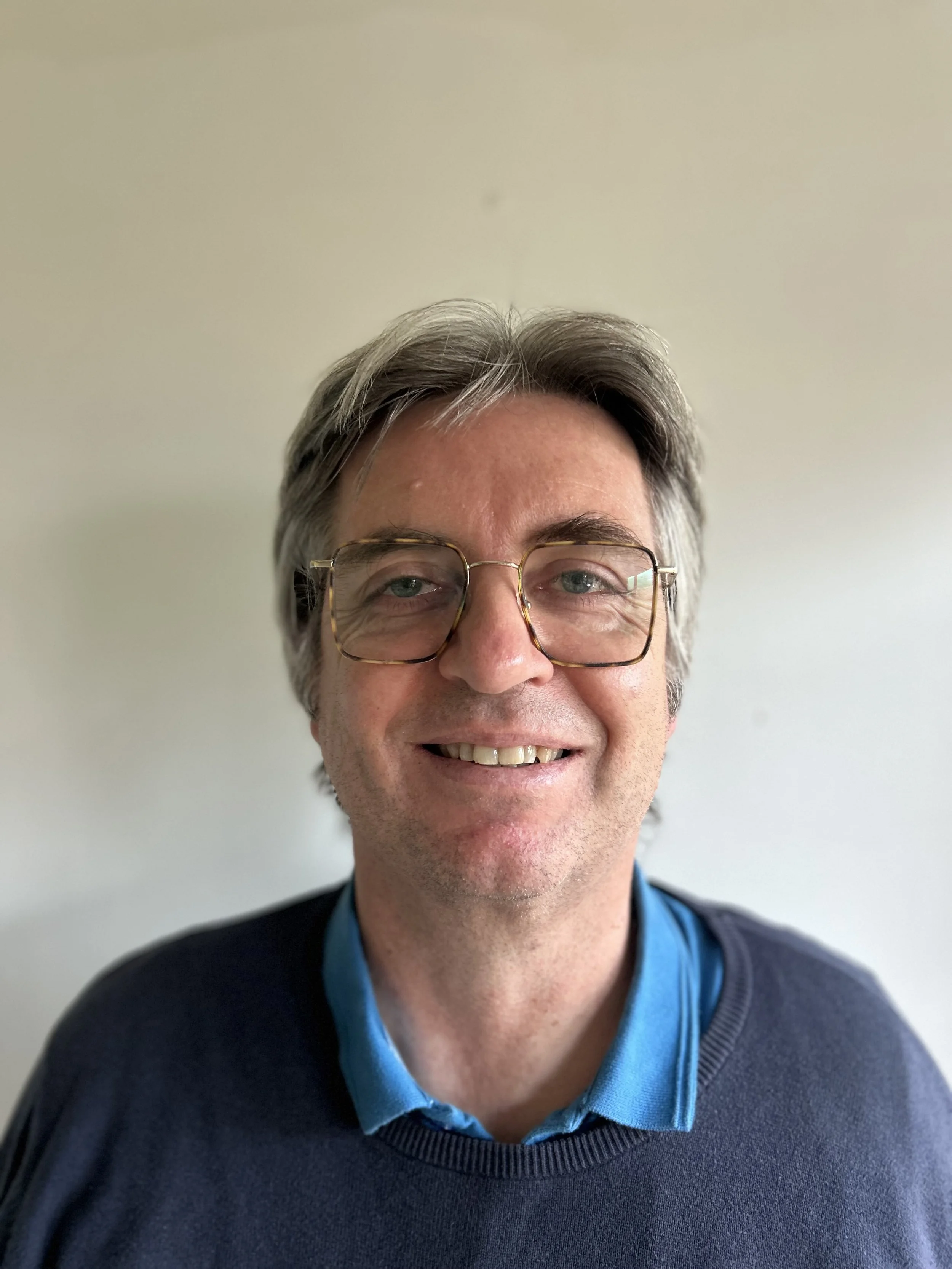
Emmanuelle Jacquet is a full professor in biomechanics of soft tissues at the université Marie et Louis Pasteur (Besancon – France). She is affiliated with the Femto-ST Institute (Besancon – France) since 1993 and began her biomechanical works on human skin in vivo since 1996. She holds the academic department of biomedical engineering school specialized in medical devices (ISIFC) and leads the research team in biomechanics of soft tissues at the Department of Applied Mechanics in FEMTO-ST Institute. Her research focuses on understanding mechanical behaviour of soft tissues during their working and tissues such as skin, arteries and tissues composing human perineum.
👉 Université Marie et Louis Pasteur
👉 http://sciences.univ-fcomte.fr/
-
Jérôme Chambert is an Associate Professor of Mechanics at the Université Marie et Louis Pasteur in Besançon, France. He is a member of the Department of Applied Mechanics at the FEMTO-ST Institute in Besançon. He obtained his PhD in Mechanical Engineering in 2001 at the Université Blaise Pascal in Clermont-Ferrand, France. His doctoral studies focused on the modelling of ductile fracture in metals using micromechanical models based on a local approach. In 2001, he joined the metal forming research team in the Department of Applied Mechanics in Besançon, where he analysed the blanking of thin copper sheets. For the past fifteen years, his research has focused on the biomechanics of soft tissues with applications in dermatology, surgery, and gynaecology.
👉 Université Marie et Louis Pasteur
👉 http://sciences.univ-fcomte.fr/
📧 Jerome.chambert@univ-fcomte.fr
-
Arnaud Lejeune is research engineer in computational mechanics at Université Marie et Louis Pasteur (Besancon – France), after 3 years spent in Michel Pottier-Ferry’s team at LEM3 Laboratory (Metz – France) he is affiliated with the Femto-ST Institute (Besancon – France) since 2010. His research lies in numerical methods to deal with non-linear problems such as contact modeling or material non linearities. He obtained his PhD in engineering sciences from the Université de Franche-Comté (France)) where he explored local instabilities and bifurcations phenomena to predict necking and wrinkling/buckling in sheet metal forming and tube hydroforming.
-
Patrick Sandoz is a senior researcher at CNRS since 1993 and he is affiliated with the FEMTO-ST Institute. Physicist, his research is pluridisciplinary. He developed diverse measurement methods at the micrometer and nanometer scales, notably based on interferometry and computer micro-vision. He also contributed to the development of biomedical instrumentation dedicated to the in vivo characterization of the human skin and to correlative microscopy. He is also interested in addressing psychosomatic issues from an engineering science perspective rooted in Darwin's theory of evolution of species.
-
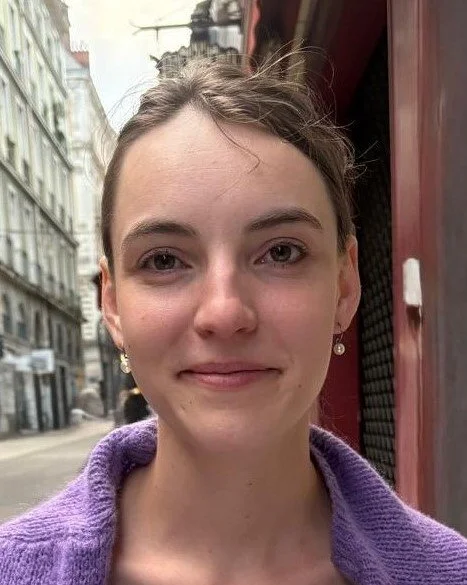
Eva Sala has begun her PhD thesis the November 2025.
The PhD title : "Strain fields under extreme loadings" under the direction of Emmanuelle Jacquet (CNRS_FEMTO), Jérome Chambert (CNRS_FEMTO), Arnaud Lejeune (CNRS_FEMTO) and Marine Lallemant (CHU Lille).
With an engineering background specialised in the mechanics of polymer and composite materials, Eva has joined Pelvitrack as part of her PhD at the Femto-ST laboratory in Besançon, France.
The aim of her research is to develop a method for monitoring perineal deformation fields during childbirth, by combining stereophotogrammetry with numerical simulation.