


Team members
-
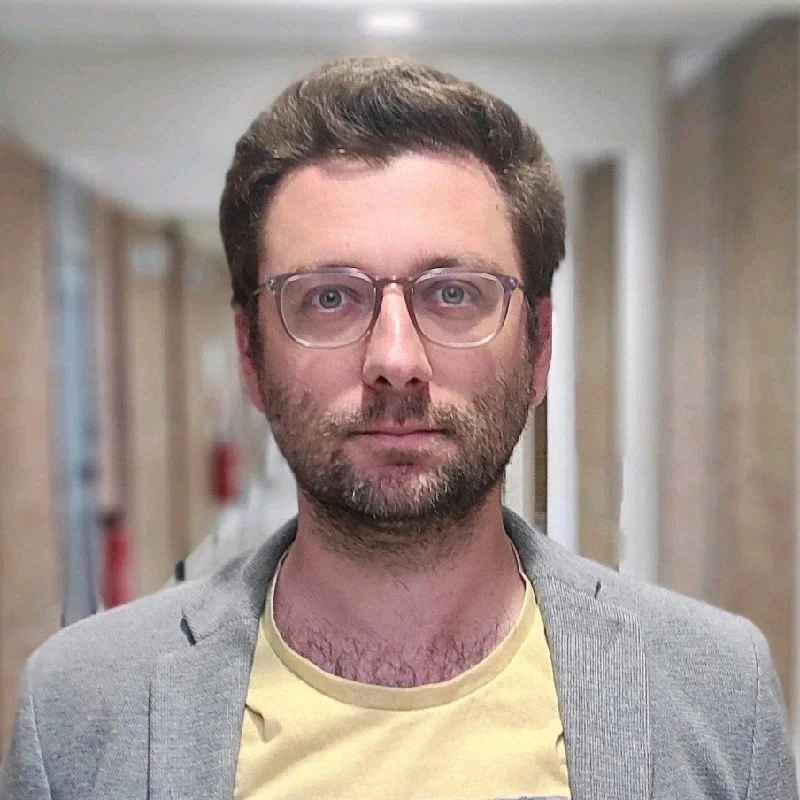
Olivier Mayeur is an Associate Professor in Biomedical Engineering at Centrale Lille and a member of the LaMcube UMR 9013 CNRS laboratory. His research focuses on digital twins for health, with applications in personalized medical device design and computational biomechanics. Over the years, his work has increasingly centered on female pelvic biomechanics, in close collaboration with clinicians in obstetrics and gynecology, with a particular interest in physiological and pathological mobility of pelvic structures and their clinical significance.
His scientific activity is grounded in patient specific and multi-physic simulation, combining imaging based geometry extraction, finite element modeling, soft tissue constitutive laws, and simulations of physiological or surgical conditions. These approaches have been applied to the thorax, the female pelvic system (including prolapse and pelvic floor disorders), childbirth (obstetrical digital twins), abdominal wall pathologies, and maxillofacial structures such as the temporo mandibular joint.
Within the PELVITRACK project (HORIZON EIC 2024 PATHFINDEROPEN 01), Olivier contributes to the development of a comprehensive digital twin of the pelvic system, with a focus on advanced multi-physics modeling and patient-specific biomechanical analysis. His work aims to bridge engineering, computational modeling, and clinical research, and to foster the integration of digital twins into women’s health applications.
-
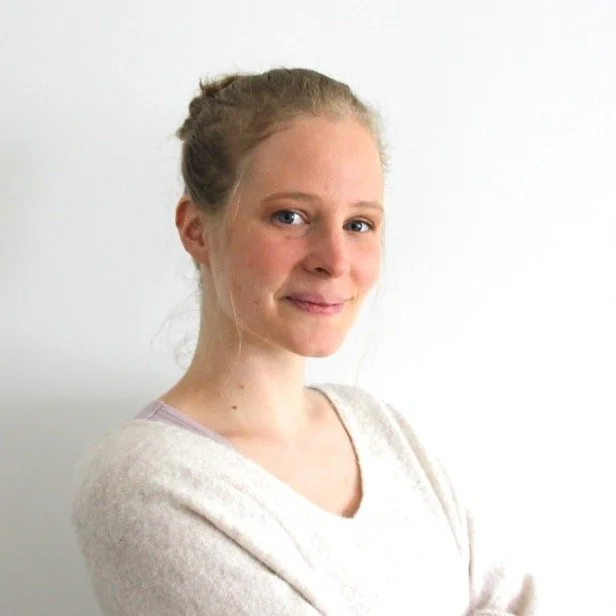
Morgane’s academic path began in medical school as she studied medicine for two years at the University of Lille, before she moved towards biomechanical engineering and research. Since her graduation as a biomechanical engineer from the University of Technology of Compiegne in 2017, she had the chance to work on several international research projects, at Northeastern University in Boston (USA) and later at KU Leuven in Belgium, exploring topics ranging from bone physiopathology in young athletes to performance optimization. In 2020, Morgane obtained the French Agrégation, a highly selective national qualification for teaching, in Biology and Life Sciences and spent two years teaching in secondary education. She has conducted her doctoral thesis at the LaMcube laboratory, between October 2022 and May 2025, focusing on fetus-specific musculoskeletal modeling for enhanced childbirth simulations. She is now continuing her research at LaMcube as part of the European project Pelvitrack - an EIC Pathfinder project, where she works on developing tools to help prevent perineal trauma.
A list of Morgane’s publications are available on her research gate profile: https://www.researchgate.net/profile/Morgane-Devismes-Ferrandini/research